
Land - nature - long-term value
Turn land into a living asset.
A clear route from ecological potential to registered, market-ready Biodiversity Net Gain units for England's BNG market.
- 10%
- minimum biodiversity net gain for most qualifying development
- 30 years
- minimum management commitment for secured off-site habitat
- 1 metric
- statutory biodiversity metric turns habitat change into units
Registered off-site BNG units
Landowner-led habitat banking
Legal, ecological and commercial structure
Long-term delivery and monitoring
The market
Development now carries a measurable nature obligation.
For most qualifying development in England, the baseline is simple:
30
years
minimum management commitment for secured off-site habitat
1
statutory
metric
turns habitat change into standardised biodiversity units
metric
The result: a legally recognised demand for off-site units when developers cannot deliver enough gain within their own red line.
Why habitat banks exist
Off-site land closes the gap that development sites cannot.
The asset
A habitat bank converts planned nature recovery into saleable units.
The landowner retains ownership and chooses which areas enter the project.
Ecologists measure the baseline and model habitat creation or enhancement.
A section 106 agreement or conservation covenant secures delivery for at least 30 years.
The gain site is registered and units can be allocated to developments that need them.
The commercial value is created by the uplift, not by selling the freehold.
The uplift plan
Restore the weakest land. Connect the strongest habitats.
Arable to meadow
Convert low-diversity land into species-rich grassland where soil, management and location make it credible.
River and wetland
Use watercourses, floodplain features and wetland restoration to create higher-functioning habitat mosaics.
Woodland edge
Strengthen existing woodland margins with buffers, glades, scrub transition and sympathetic management.
Hedgerow links
Reconnect habitats with linear features that improve movement, structure and landscape resilience.
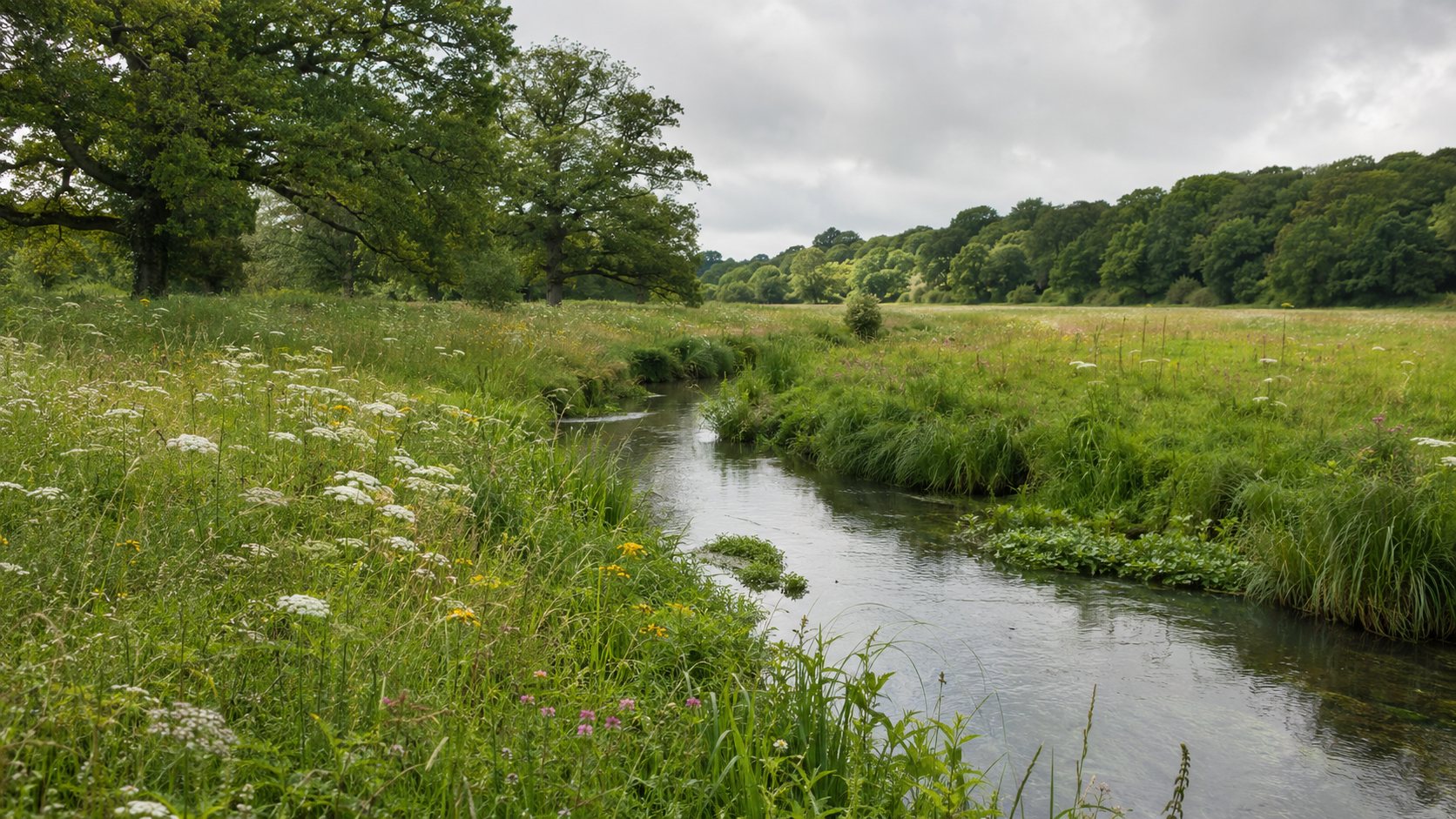
The strongest plans create a connected ecological network, not isolated pockets of intervention.
How value is measured
The metric rewards the right habitat, in the right condition, in the right place.
Habitat type
What exists now and what will replace or improve it.
Extent and condition
Area, length and ecological quality at baseline and target.
Delivery risk
Time to target, difficulty, spatial relevance and legal security.
Resulting uplift
The difference becomes standardised biodiversity units.
Baseline
→
Target
= Units
Illustrative estate model
Scale can turn ecological uplift into a substantial long-term asset.
- 1,600 acres
- example estate size
- 700-800
- indicative additional BNG units
- £17-23m
- illustrative gross uplift value before delivery and management costs
Every site is different. Unit yield, sale price, legal costs, management costs, location and buyer demand must be assessed site by site.
Illustrative case study only. This is not a valuation, forecast or guarantee.
Monetisation
The opportunity is managed over time, not treated as a one-off disposal.
Foundation tranche
Prioritise deliverable units and establish market confidence.
Main tranches
Release the largest volumes as habitat delivery progresses.
Later and reserve
Retain optionality where future scarcity may support value.
A robust model ring-fences habitat delivery and 30-year management before treating residual proceeds as landowner return.
Legal certainty
Units only carry value when the habitat promise is secure.
Retains the freehold and commits defined land and management obligations.
A section 106 agreement with an LPA or a conservation covenant with a responsible body.
The HMMP guides creation, maintenance, monitoring and reporting for at least 30 years.
Gain sites and allocations are recorded to support traceability and planning compliance.
Clear governance protects the landowner, the buyer and the ecological outcome.
The route to market
A disciplined workstream can move an estate from potential to launch.
- 01Screen
Land, constraints, opportunity
- 02Survey
Ecology, GIS, soils, hydrology
- 03Design
Metric and habitat plan
- 04Secure
HMMP and legal agreement
- 05Register
Gain site and unit evidence
- 06Launch
Buyer matching and allocation
HabitatBank.org coordinates the commercial, ecological and legal workstreams around one investable plan.
Why HabitatBank.org
One partner from first look to long-term habitat value.
Identify land parcels and interventions with credible uplift potential.
Turn ecology, costs, timing and commercial assumptions into a decision-ready case.
Coordinate the HMMP, legal agreement, governance and management funding.
Bring registered, buyer-ready units to developers with a live compliance need.
Keep delivery, monitoring and reporting aligned over the full commitment.
Keep the markets clear
BNG units are not carbon credits.
Nature uplift linked to planning.
Measured through England's statutory biodiversity metric and used to satisfy a development's BNG requirement.
Emissions reduction or removal.
A separate market with separate standards for verified greenhouse-gas reduction or removal.
A land project may explore both, but each claim must be additional, verified and governed under its own rules.
Start with the land
What could your estate become?
A first-stage opportunity review can identify likely habitat uplift pathways, survey and legal requirements, indicative unit and cost ranges, and a realistic route to market.
A short enquiry opens in your email client with the right context included.